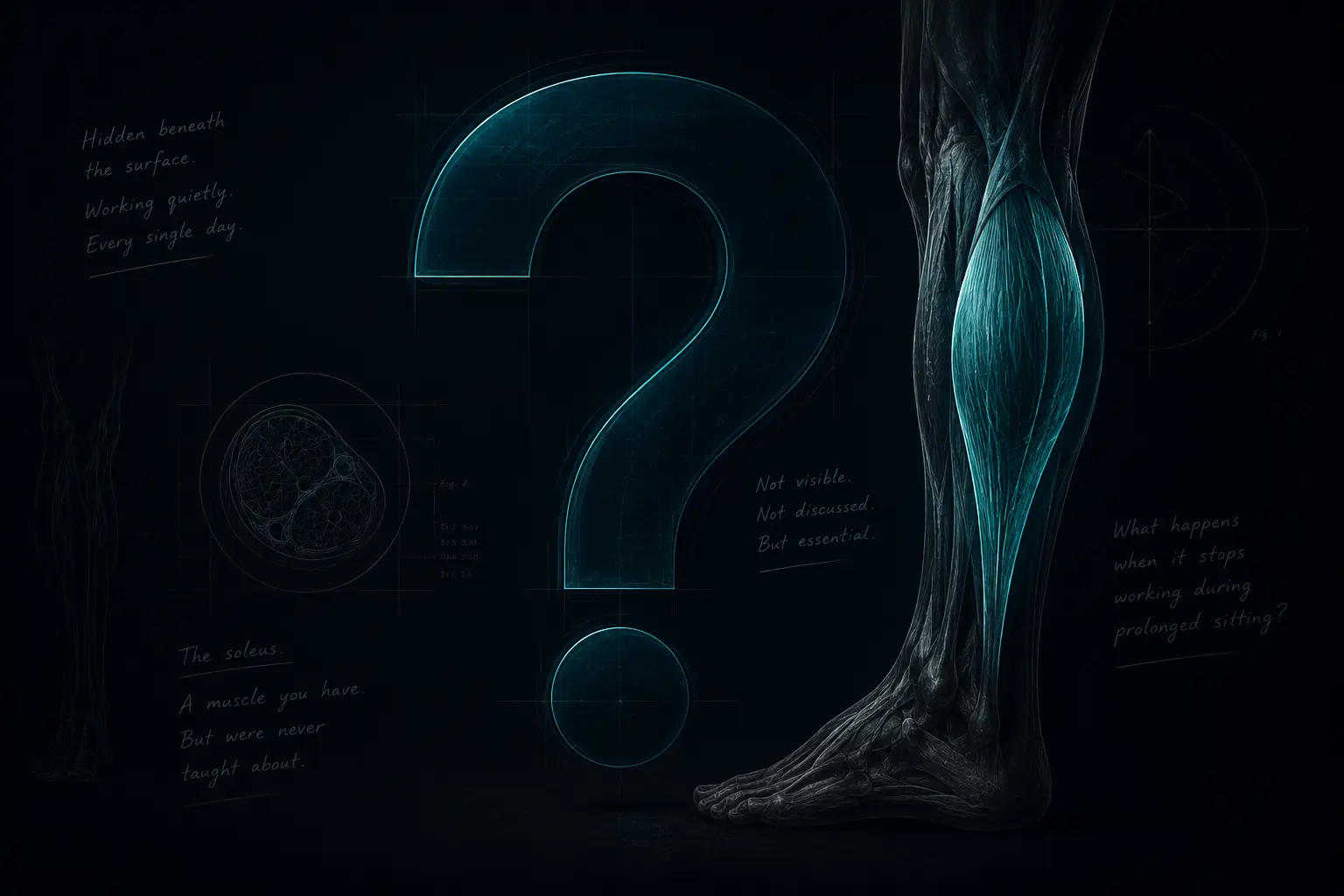
Why You've Never Heard of the Soleus Muscle
Most people can name the heart. Many can name the lungs. Some can even name the liver. Yet few people can identify one of the most active muscles in the human body: the soleus.
What Gets Attention Gets Studied
Health conversations tend to focus on what people can see. Weight loss. Abs. Running. Athletic performance. The soleus never belonged to any of those categories. It wasn't a glamorous muscle. It simply worked quietly in the background.
Some discoveries are hidden because they're complicated.
Others are hidden because nobody thinks to look. For decades, health conversations focused on the things we could easily see: The heart. The lungs. Body weight. Exercise. Steps. Calories. Heart rate. The soleus sat quietly in the background. Not because it wasn't important. Because it wasn't the centre of the conversation.
Then something changed.
Researchers began looking more closely at what happens during prolonged sitting. Not exercise. Not running. Not workouts. Sitting. The hours that fill most modern days. And that shift in perspective led them somewhere unexpected. Back to a muscle that had been there all along.
Most muscles are designed for bursts of effort. The soleus is different. Researchers have described it as uniquely resistant to fatigue. It can remain active for long periods while consuming relatively little energy. That characteristic alone makes it unusual. But it also raises a question. If a muscle like this exists... what happens when modern life gives it less opportunity to do what it was designed to do?
Hidden In Plain Sight
Every time you stand. Every time you walk. Every time you remain upright for long periods. The soleus is already working. Most people just never had a reason to learn its name.
The Question
That question matters more than any answer. Because once you ask it, you start noticing something strange. Modern life has changed dramatically. The human body hasn't. We work differently. Travel differently. Live differently. Sit differently. Yet we're still learning what those changes mean.
Maybe The Real Discovery Isn't The Soleus
Maybe the real discovery is the question itself. What happens inside the body during the hours we spend sitting? Not before. Not after. During. That question led researchers deeper into the science of sitting. And eventually, it led us here.
Hidden beneath the surface. Working quietly. Every single day. Not visible. Not discussed. But essential. What happens when it stops working during prolonged sitting? The soleus. A muscle you have. But were never taught about.
The real question isn't why you've never heard of the soleus.
The real question is: What else might we be overlooking about the hours we spend sitting?
That question is why the next chapter exists.