Why Sitting All Day Affects Circulation and Health
Most health advice focuses
on 1 hour.
We became obsessed with
the other 8.
Nobody Talks About
We designed the modern world around sitting. Work happens sitting. Meetings happen sitting. Travel happens sitting. Learning happens sitting. Entertainment happens sitting. For millions of people, sitting is no longer an occasional activity. It's the environment in which life happens.
Yet We Rarely Think About It
Most health conversations begin when we stand up. Go for a walk. Visit the gym. Start a workout. Track a run. Close a fitness ring. Those moments matter. But they represent only a small fraction of the day. What about the rest of it?
Imagine two people. Both exercise regularly. Both care about their health. Both make an effort to stay active. Then both spend the next eight hours sitting. Working. Typing. Reading. Attending meetings. Living the same modern life as everyone else. What happens during those eight hours? Most people don't know. Until recently, few people were even asking.
The Blind Spot
Modern life changed faster than human physiology. Our workplaces evolved. Our technology evolved. Our schedules evolved. But the body remains remarkably similar to the one that existed long before desks, laptops and office towers. The result is a question hiding in plain sight. Have we spent too much time thinking about exercise and too little time thinking about sitting?
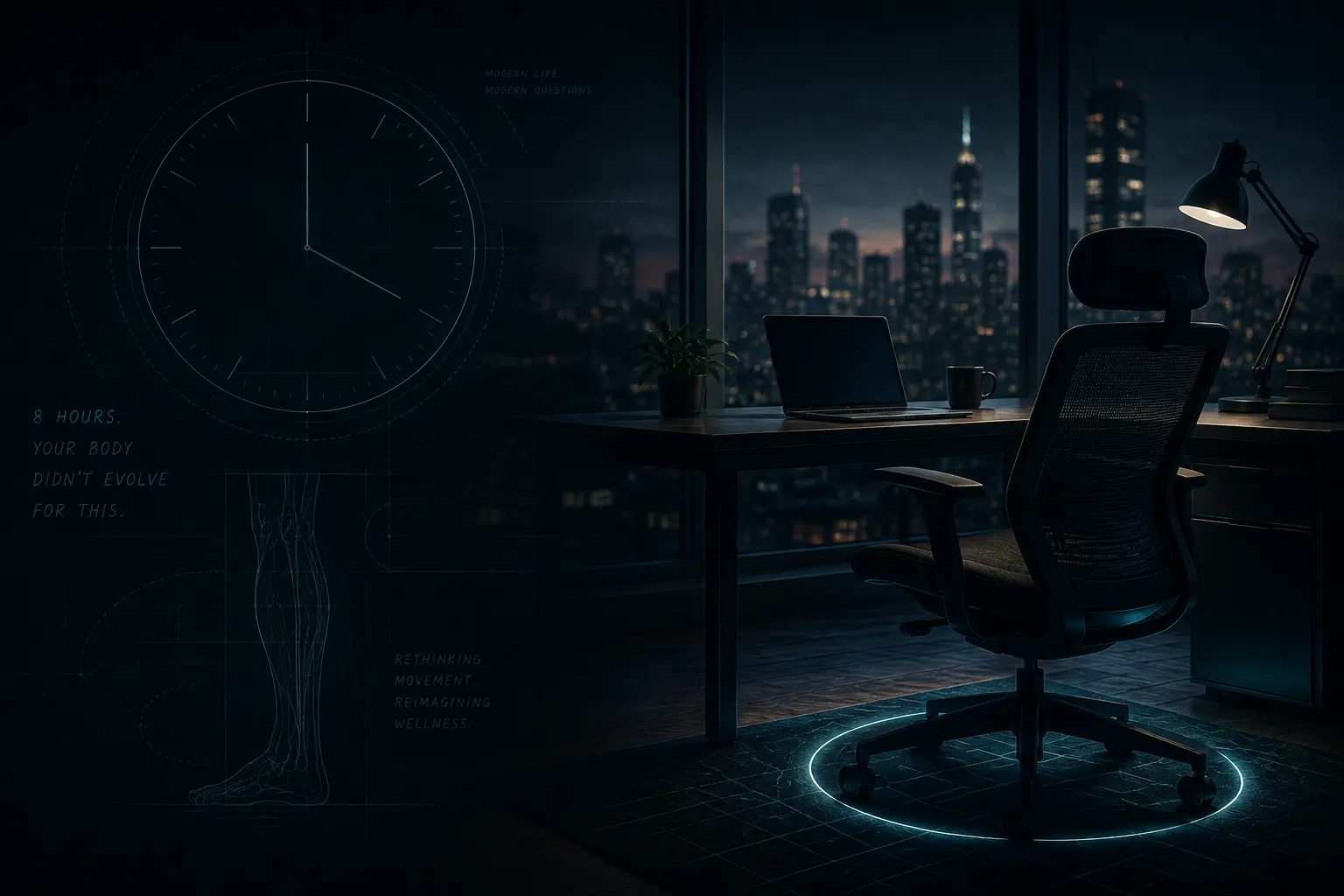
8 HOURS. YOUR BODY DIDN'T EVOLVE FOR THIS. Rethinking movement. Reimagining wellness. Modern life. Modern questions.
Not: How many steps did you take?
But: What happened during the hours you weren't taking them?
Not: How hard did you exercise?
But: What happened between workouts?
Not: How do we redesign exercise?
But: How do we rethink sitting?
For decades, the question has been: How do we move more?
A different question may be equally important: How do we make seated hours healthier?
A Different Perspective
For years, the goal was simple: Move more. Exercise more. Walk more. Those ideas remain important. But what if there's another layer to the story? What if the future isn't only about helping people move more? What if it's also about understanding what happens while they remain seated?
Chairs are not going away. Offices are not going away. Computers are not going away. The challenge is not eliminating sitting. The challenge is understanding what happens during it.
The story of health technology has largely been a story about movement. Perhaps the next chapter is about understanding stillness.
The future may not be eliminating chairs.
The future may be understanding them better.
We don't have all the answers. But we're building something that might help find them.