I did not start in healthcare.
For more than 25 years, I built businesses across financial services, automobiles, fleet operations, and vehicle servicing. Medical devices were never part of the plan.
Then everything changed.
I was diagnosed with Type-2 diabetes. My blood glucose levels were above 350 mg/dL.
Like many people, I started searching for answers.
During my search for answers, I came across a public claim suggesting that people who spent years operating traditional foot-powered sewing machines appeared to have unusually low rates of diabetes. I couldn't verify whether the claim was true, but it raised a question I couldn't ignore.
The claim itself wasn't what caught my attention.
The question behind it did.
"What if the movement itself mattered?"
Instead of asking whether the claim was true, I wanted to understand the movement itself.
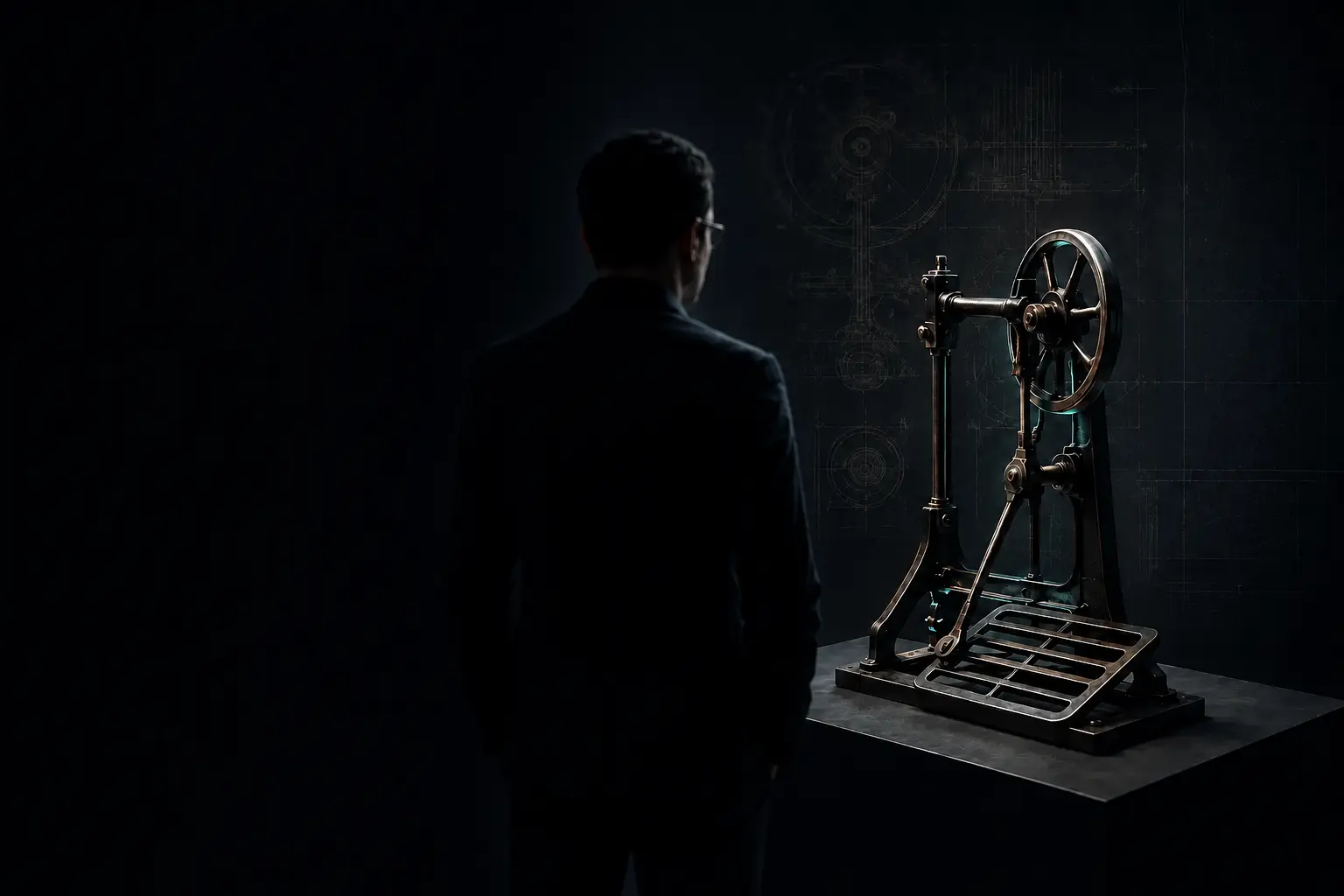
I obtained a traditional foot-operated sewing machine mechanism and began studying what happened when that same rhythmic lower-leg movement was repeated while sitting.
I wore a Continuous Glucose Monitor. I kept my diet unchanged. I kept my routine unchanged. The only variable I added was regular foot-pedaling sessions.
The observations surprised me.
My glucose readings repeatedly dropped by approximately 15–20 mg/dL compared with baseline days.
I wasn't looking for a business.
I was looking for an explanation.
Eventually, that search led me to the research of Dr. Marc Hamilton and colleagues, whose work explained the unique metabolic role of the soleus muscle during seated movement.
For the first time, the question had a scientific language.
I wasn't just looking at observations anymore.
I was looking at physiology.
For the first time, I wasn't looking at isolated observations anymore. I had a scientific framework that explained why a small muscle in the calf could have a much larger role in circulation and metabolism than most people realize.
The deeper I went, the more one question refused to leave me alone:
"Can movement become part of sitting?"
I searched for products designed specifically around that idea.
I could not find one.
So I made a decision that many people considered irrational.
That question became months of reading research papers, studying biomechanics, speaking with engineers and clinicians, and eventually relocating to an incubation center to explore whether this science could be translated into a practical technology.
I stepped away from a running business, left Delhi, and relocated to AMTZ India's largest medical technology manufacturing and innovation ecosystem in Visakhapatnam.
I wasn't trained as a doctor.
I wasn't trained as an engineer.
So I became a student of both.
Over the following months, I immersed myself in biomechanics, sensing technologies, regulatory science, medical device development and clinical researchnot because I was an expert, but because the question demanded it.
That journey became 2HEART.
We were not trying to build a company. We were trying to understand whether a different kind of seated movement could matter.
The goal was never to build another fitness product.
The goal was to understand the physiology of sitting with the same seriousness that we study the physiology of exercise.
Today, 2HEART is helping define a new category called Soleus Health the idea that the hours we spend sitting may matter just as much as the hours we spend exercising.
The product is still being built.
The question remains the same.
But the question that started this journey remains the same:
"Can movement become part of sitting?"